Sunday, August 31, 2025

"Figure It Out"

"What stands in the way becomes the way." - Marcus Aurelius

Growth and struggle are inseparable. Success rises from failure. In 2002, Melrose played Arlington Catholic in the postseason second round and lost in straight sets. In 2003, they met again in the sectional finals, AC 22-0 and Melrose 21-1. With a pair of 6'2" middles, AC had not lost a set all season. Melrose earned its first sectional title with a 3-0 sweep. 

Sport teaches and reveals certain truths. Young players filter the "firehose" of information, trying to figure it out. More experienced players understand that they're still trying to figure it out. 

1. What's your MVB skill

What gets you on the court and keeps you on the court? Think of an 'array' of core skills. 

  • Serving
  • Attacking/Blocking (the yin and yang)
  • Setting/Hitting (the horse and carriage) 
  • Digging/Passing 
You don't have to be "great" at everything. The short DS won't be a great blocker. The middle hitter doesn't have to serve. You need something to earn a role. "Know thyself."

2. Throw your out pitch

You need a "calling card" or "signature play." Then you add "secondary pitches." 

Early on in your career, you benefit by understanding how to become a "technician." Learn by watching Internet video then study your own. Compare who you are today with whom you will become in a month. 

3. "Look for the helpers." - Mr. Rogers

All players have this in common...a desire to be more. Great players want to be coached up to dominate. Less accomplished players want to grow to earn a bigger role. Everyone differs in how they go about it. Work on your approach.

LeBron James spends a million dollars a year on training, trainers, and nutrition. Find 'free' answers from your coaches, the Internet, and artificial intelligence (free sites like ChatGPT and Claude.ai. 

Translate 'theory' into practice by work. How do you serve harder? Practice serving harder. How do you serve into seams and alleys? Practice. Commit to improving. When Coach asks you to serve Zone 1 to Zone 1 in practice, work on it. 

4. Do mental repetitions. Mental repetitions also have physiologic effects. 

Via ChatGPT Plus: Mental repetitions in volleyball—often called visualization or motor imagery—have measurable physiologic effects that overlap with actual physical practice. Here’s a breakdown of the mechanisms and outcomes:

1. Neural Activation

  • Motor cortex recruitment: Brain scans show that imagining a skill activates many of the same neural pathways as executing it. A volleyball player mentally rehearsing a block or jump serve stimulates motor cortex, premotor cortex, and cerebellar circuits.

  • Myelin reinforcement: Repeated activation strengthens synaptic efficiency, which can accelerate skill acquisition and sharpen execution when the actual movement occurs.

  • Mirror neurons: Visualization engages mirror neuron systems, which link observation, imagination, and physical performance.

2. Autonomic Nervous System Effects

  • Heart rate and respiration: Athletes who vividly visualize often experience subtle increases in heart rate, respiration, and galvanic skin response—showing that the body partially “believes” it is performing.

  • Arousal regulation: Controlled imagery helps athletes simulate high-stress situations (match point serve, defending a quick attack) while practicing calm breathing and emotional control. This can lower cortisol and improve composure in real matches.

3. Muscle Recruitment and Priming

  • Motor unit facilitation: Even without movement, small EMG (electromyography) activity can be detected in the muscles being imagined (e.g., quadriceps during a jump, forearm flexors during a serve).

  • Neuromuscular readiness: This primes muscle fibers, making subsequent physical repetitions more efficient. Mental reps act as “extra touches” without physical fatigue.

4. Cognitive and Perceptual Benefits

  • Pattern recognition: Visualization helps train reading skills—seeing the opponent’s setter’s shoulders, anticipating tips vs. swings, or tracking serve trajectories.

  • Spatial awareness: Players mentally map positions, rotations, and seam coverage, sharpening decision-making in live play.

  • Error correction: Imagining the “perfect technique” without the distraction of fatigue reinforces correct mechanics, helping overwrite bad habits.

5. Performance Outcomes in Volleyball

  • Serve and serve-receive: Mental rehearsal of target zones improves accuracy under pressure.

  • Blocking: Imagining the hitter’s approach and timing the jump can improve reaction quickness, since the brain is trained to recognize cues faster.

  • Transition speed: Players who visualize moving from defense to attack show smoother, faster real-time transitions.

  • Confidence and resilience: Regular imagery enhances belief in execution, especially for players who may physically be rehabbing or limited in practice reps.

Bottom line:
Mental repetitions in volleyball produce real physiologic changes—from subtle muscle activation and neural reinforcement to autonomic responses—making them a powerful complement to physical training. They extend practice time without adding mechanical stress, help regulate arousal, and prepare athletes to execute skills and decisions under competitive pressure.


The "Can't Miss Kid"

Opinions expressed in the blog are solely my own.

What informs being The Can't Miss KidPeter Abraham's article about Willie Romay, the scout who projected Red Sox outfielder Roman Anthony, shares some thoughts.

MVB has four freshmen on the roster this season, all expected to contribute. Along with four sophomores, that means an abundance of youth. What did an MLB scout say about 'projection'?

“The first thing was his good family dynamic,” Romay said. “I got to know his mother and father and saw that he had the support system that young players need. Plus, he was mature for his age.”

Family support matters in every endeavor. Academic achievement, sport, music, drama, and other pursuits ask families to sacrifice time and treasure. It's a big ask. 

“High school baseball was part of his development, which isn’t always the case now ...They have a process there and the players are taught to do things correctly."

Winning is never a given. Collaboration, connection, and coachability all are critical. Coach Scott Celli has noted that "skill, health, and luck" matter. The sign in the UNC Women's Soccer locker room reads: "Excellence is our only agenda."

“A winning player,” Romay said. “That’s what I saw.”

"We make our habits and our habits make us." Attention is a habit. Hard work is a habit. Good choices on and off the court are habits. Winning players have winning habits.

“He was confident in his ability and put his best swing on the ball.”

Less experienced players can be hesitant to take their best swing on the ball. Self-reflection and proper technique (including full backswings) lead to self-confidence. This transforms players from playing "in between" to taking great swings.  

"...you’d go to the ballpark expecting something special was about to happen,” Romay said. “Scouting Roman I had that same feeling. He brought it to the field."

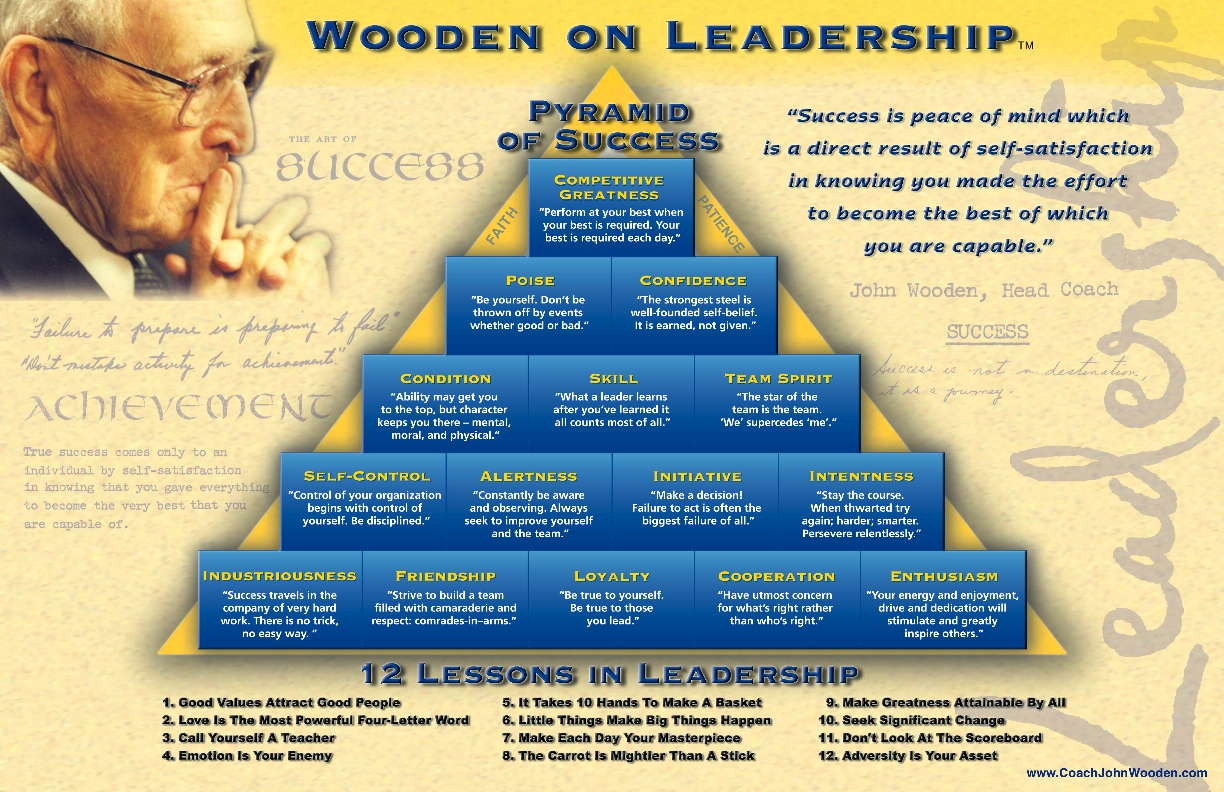
Player development takes commitment, time, and belief. At the top of Coach John Wooden's "Pyramid of Success" are FAITH and PATIENCE...that means belief and time.  

"Prove it" every day. 

Lagniappe. "I thought it was your dream to dance." Have you practiced your footwork, armswing, and platform today? 


Lagniappe 2. Develop a list of drills that you can practice alone or with a partner. 


Saturday, August 30, 2025

"Every Day Is Showtime" - Performance Tips

"Every day is showtime." 

In school, at work, and in sports, people judge our performance daily. Pride in standards plays. 

Key Point 1. Approach practice with specific goals. "I want to improve serve placement" or "I'm improving my serve-receive consistency." 

How? 

Key Point 2. Set your daily goal and track results. "Winners are trackers." If you take ten serves, commit to focus on placement on all ten. That takes mental strength. 

In "Above the Line," Coach Urban Meyer opines that within large teams there are 10-80-10 percent distributions. Meyer required top 10 percenters to train with another, working to "pull" another ambitious player into that top 10 percent. Pull yourself and a teammate upward. 

Key Point 3. Give yourself graceCaveats are "cautions" for yourself or others. Progress doesn't occur evenly. Usually plateaus follow gains. Sometimes slight regression can occur.

Lagniappe. Immerse yourself in positive thinking. It's proven to work.  


In-Season Conditioning*

All opinions expressed in the blog are mine. The blog is not an official publication of MVB or any Melrose institution.

*Always check with Coach Scott Celli about his recommendations for skill development, strategy, physical training, and resilience. 

Sport rewards proper technique ("form begets function") and athletic explosiveness. Strength, conditioning, and lateral quickness are essential for elite athletes.

I asked ChatGPT Plus for thoughts on in-season conditioning.

In-season volleyball conditioning needs to strike a balance: maintain strength, quickness, and jump ability while minimizing fatigue and injury risk. Here’s a breakdown:


Types of In-Season Conditioning That Help

  1. Maintenance Strength Work

    • Short, lower-volume lifts 1–2x per week (squats, deadlifts, presses, pull-ups).

    • Focus on multi-joint strength, but keep intensity moderate to avoid game-day soreness.

  2. Core Stability and Injury Prevention

    • Anti-rotation work (Pallof presses, planks with reach).

    • Hip/glute activation (monster walks, single-leg bridges).

    • Shoulder care (band external rotations, scapular stability).

  3. Agility & Movement Efficiency

    • Short lateral shuffles, crossover steps, and acceleration/deceleration drills.

    • Emphasis on quick first-step reactions for defense and blocking.

  4. Conditioning for Energy Systems

    • Volleyball is anaerobic-alactic (short, explosive rallies).

    • Use short sprints, repeated jumps, or high-intensity intervals (10–20 sec) with adequate rest.

    • Avoid long-distance running—it doesn’t match the sport demands and can interfere with jump power.


Do Plyometrics Belong In-Season?

✅ Yes, but carefully:

  • Benefits: Preserve explosiveness, reinforce neural drive for jumping, blocking, and hitting.

  • How to Use Them In-Season:

    • Low-volume, high-quality reps (e.g., 2–3 sets of 4–6 jumps).

    • Examples: depth jumps, box jumps, lateral bounds, pogo jumps.

    • Schedule on practice or lift days, not the day before matches.

    • Emphasize landing mechanics to reduce joint stress.

❌ Avoid:

  • High-volume jump circuits (they add fatigue).

  • Doing plyos when athletes are sore or under-recovered.


Practical In-Season Plan

  • Early Week (after recovery day): Moderate strength + low-volume plyos.

  • Mid-Week: Agility, core stability, and shoulder prehab.

  • Game Eve: Light mobility, activation, and speed reaction drills (no heavy lifting or plyos).


👉 In short: conditioning in-season is about maintaining power, strength, and resilience without draining legs before matches. Plyometrics belong, but as a sharp, limited “spark” rather than a grind. 

Beta Testing

Melrose hosted a volleyball Playday at the MVMMS for a final run-through before the road opener September 3rd at Belmont.

Every season brings unique challenges with player graduation and competition for roles.

A dominant theme for this season should be "growth mindset" as Coach Scott Celli and staff climb twin peaks of individual fundamentals and team coordination.

The recipe for young teams involves specific corrections, extra time devoted to fundamentals, patience and empathy. 

  • First passes can be better without worrying about perfection.
  • Hitters can get on top of the ball more consistently. 
  • Serves can find seams and sideline alleys more often.

Teams rise with a blend of positive scoring and minimizing defensive errors. It's important to know that the lineups in early September and late October often evolve. 

You don't need a gym to work on many fundamental techniques. Young players usually have improvement opportunities on backswing in particular. Change bugs into features. 


"Trust the Process" and DOT B


Sport is a microcosm of life. Themes repeat. 

1. Create advantage. Exploit advantage with execution. Repeat. 

2. "Always do your best." (from The Four Agreements)

3. "Do more of what works and less of what doesn't." 

4. Do more of what success demands. Listen. Focus. Make the girl next to you better. Be coachable. Play in the moment. 

5. Better ingredients, better pizza translates to better process, better results. Sara Blakely (Spanx CEO) says it another way, "Obsess the product." 

Tip: Remember the expression DOT B (or .B)...stop and take a cleansing breath to refocus on "next play." 


"Carpe Diem"

Expressions gain footholds across languages and time. The Latin carpe diem literally translates to "seize the day." Similar sayings litter the landscape. 

Some fans get their first look at MVB today. "You never get a second chance to make a first impression." 

English & Modern Equivalents

  • Make hay while the sun shines

  • Strike while the iron is hot

  • Don’t put off until tomorrow what you can do today

  • Live in the moment

  • "The best time to fix the roof is when the sun is shining." - JFK

Sporting & Motivational

  • Leave it all on the field

  • Play the point in front of you

  • Be where your feet are

  • "Control what you can control."

  • "Make the big time where you are." 

Friday, August 29, 2025

Time

Time is a precious and irreplacable asset.  

Productivity equals work/time. Get more done in alloted time.

Preparation (planning your time) helps you achieve more. 

Avoid distractions (cellphones, other electronics) that degrade performance. Computers do not "multitask," working by rapidly switching between one task and another. People don't work with that efficiency. 

Don't think in terms of putting in time; put in the work in the required time. 


First Contact

“No plan survives first contact with the enemy.” - 19th-century Prussian field marshal Helmuth von Moltke the Elder

“When you come in out of the storm, you won’t be the same person who walked in.” - Haruki Murakami 

Today's Playday creates opportunity against good competition. 

Arguably, the reality survival show Alone (History Channel) best represents man's struggle with nature. Highly skilled competitors survive alone in similar ecosystems (Season 12, South African desert) and compete for winner-take-all $500,000. For the ultimate winners, it's about the challenge, not money. 

Coaches and players need plans, but remember von Moltke's caution. 

Compete. The competition for sporting roles resembles wilderness survival. 

  • Baseline skills - refine 
  • Competitive spirit
  • Growth mindset 
  • Adaptability and flexibility

Simplify. In baseball, it's knowing your "out pitch." Leverage your skill. Prioritize your best ability (attacking, serving, blocking, defending) while growing your total game. 

Pass. Consistent passing is essential. Think "middle of the court, high" which makes life simpler for your setter. Don't let an error bleed into a series of mistakes. 

Believe. Don't worry about perfection. President Reagan told a joke about two hunters sitting around a campfire. They spotted a grizzly and one scrambled to don his sneakers. His buddy said, "You can't outrun a grizzly." Sneaker Guy said, "I just have to outrun you." Become a better passer and play more. 

Improve. Focus on daily progress. Serve a little better. Defend better. Communicate better. You'll get there. 

Preparation is essential; adaptability is decisive.

Lagniappe. Get back on the road. 

"“Whenever Intuit makes a wrong turn,” UBS analyst Brent Thill told The New York Times, “they quickly get off the gravel and back onto the blacktop. That’s why the company has done so well for such a long time.”" - "Measure What Matters: How Google, Bono, and the Gates Foundation Rock the World with OKRs" by John Doerr

Lagniappe 2. Murakami quotes:

"Pain is inevitable. Suffering is optional." 

"Whatever it is you're seeking won't come in the form you're expecting."

"As long as you have the courage to admit mistakes, things can be turned around."


The Cost of Growth

The mogul skier finished her run and a ten year-old girl said, "I love watching you ski. You never fall." The skier realized at that moment that she never fell because she was holding back. She resolved to take more risk...and became a champion.

Every dig won't be made. Every attack won't be completed. But you can't score on the shots you never take. 

Athletes calculate risk and benefit in the moment. The best players make the best decisions and execute more often. Failure is the cost of growth. 

Thursday, August 28, 2025

A Brief Classical Education for Coaches and Players (*Adapted)

*Adapted from my basketball blog...

All opinions expressed in the blog are solely mine. The blog is not an official publication of Melrose Volleyball or any other Melrose entity. 

Coaches are teachers, historians, psychologists, judges, and more. Share our classical education with our student-athletes. Use analogy where applicable to playing or coaching basketball. 

“Veni. Vidi. Vici.” - Julius Caesar, 47 B.C.  

Caesar proclaimed, "I came. I saw. I conquered." That's always the goal although not always the result. Students of coaching also remember what Dean Smith said. "A lion never roars after a kill." 

“We are what we repeatedly do. Excellence then is not an act but a habit.” - Aristotle  

Success in sport reflects our mastery of habits. 

  • Self-care is a habit - diet, exercise, sleep 
  • Skill development 
  • Study - reading, video, basketball IQ/game management
  • Resilience - mindfulness/sport psychology (have we taken even one mindful breath today?)
James Clear, author of Atomic Habits says that our habits are votes for the type of person we want to be. 

“Every battle is won before it is fought.” - Sun Tzu, fifth century B.C. 

Successful players and coaches fall in love with training. Preparation is physical, mental, game planning, player development (e.g. drill book), playbooks, and more. 

Author Salman Rushdie discusses our creative imagination and our critical imagination. Coaches develop our philosophy, offensive and defensive program and playbooks, and then revise it according to our people, opposition, and results. 

Fortune favors the bold.

The saying dates back thousands of years and has been adapted and adopted by many cultures. Coaches want players to reflect their philosophy. Strong teams invariably have aggressive players, although aggression comes in many forms - power, speed, craft. 

The unexamined life is not worth living.” - Socrates

Socrates preached the value of self-reflection and critical thinking. Watching a game, we see "intention," what a team is trying to accomplish at both ends of the court. If it's not apparent, then it's likely that clear strategies don't exist, that the teaching isn't good, or the players aren't receptive. 

"What we do now echoes in eternity." - Marcus Aurelius   

Marcus Aurelius wrote the classic Meditations. Should we care about our coaching legacy or what would we like it to be? 

Aurelius frequently reflects that even the most celebrated men—heroes, philosophers, emperors—are quickly forgotten. He reminds himself not to chase after posthumous fame because those who hand it down are fleeting, too. In Book 4, Section 19: “All of us are creatures of a day; the rememberer and the remembered alike.”

Our biggest impact is upon those whom we coach. Seek to provide them a memorable, worthy experience. 

No one can hurt you without your permission.” - Epictetus 

We've all had different types of coaches, different personalities, different substance, and different styles. In "The Four Agreements," Ruiz reminds us to "Never take anything personally," because what others say to us or about us often isn't true. 

A firehose of ideas surrounds us every day. Filter it and use whatever we can to make those around us better. 

Lagniappe. How does a play affect you? 


What's the Problem?

"You can observe a lot by just watching." - Yogi Berra

Coaches solve problems. First, they diagnose. Then, they form options among players, strategy, and execution. So what's the problem?

If coaches want to "play faster," then they need players who can play faster. Most high schools lack the luxury of recruiting players to meet their style. 

Think of players as ingredients in a gourmet meal. As Gordon Ramsay said, he cooked oxtail not because it's the best but because of affordability. Coaches and chefs still have a lot of options without the most expensive cuts of meat. Earning a Michelin star won't come by serving what's available if your neighbor has premium meats and enough skill. 

I've expressed it another way. Every team is comprised of lottery picks, first rounders, second rounders, and free agents. An area coach called Melrose a "legacy program." Legacy programs seldom have free agents. 

Lottery picks are the All-State, All-Scholastic, All-Conference players. 

First rounders can be all-conference, all-star players and those on the cusp of that level. 

Second rounders are good players who might have size, skill, or experience limitations.

The Middlesex League has more and more lottery picks and first rounders and fewer teams with limited talent. That makes for increasing competition and the need for more consistent performance. Few teams can win with their "B" game anymore.

The problem falls into two categories: 

1) Scoring points 

2) Denying opposition points. 

Melrose scores points on successful attack (serves, hits, blocks) and on opponent errors. 

Opponents score points on their successful attacks and Melrose errors. 

Success occurs:

  • Positive scoring 
  • Fewer errors (e.g. service errors, attack errors, defensive errors)
  • Denying opponent scoring (improve serve receive, better blocking, exceptional communication, reduce defending errors)
Every coach in the universe knows what is needed. The question is how to impact the above. The ability to translate the theoretical into the practical (teamwork, improvement, accountability) is the challenge. 

The saying was that when you drafted a Bob Knight (Indiana) player, "you got what you got" because they were well-coached, "finished products." 

MVB has a blend of experience and youth and not many 'finished products'. That is the problem and the opportunity which the coaches, players, families, and fans should be excited about. 

Basketball has two key sayings:
  • "Great offense is multiple actions."
  • "Great defense is multiple efforts." 
Combine those in volleyball (pass, set, hit) and "keep the ball up" and they craft, "strategic predation." 

Lagniappe. Theory and practice...

Evaluation Continues

Melrose hosted Marblehead for the second preseason scrimmage and had opportunities for both growth and learning.

Marblehead gave Melrose a good test with solid serving, attack, and defense. Melrose continued to mix and match lineups seeking a starting lineup and consistency.

Positives: 

1) Sabine Wenzel showed her array of skills, not only blocking in the middle but adding more craft at the net with a short game.

2) Melrose showed resilience throughout the match, staving off several deficits, especially in the second set which they rallied to win. 

3) Melrose's young players got valuable experience against a solid opponent. 

Growth areas always exist especially with a lineup that hasn't played together. Melrose goes back to practice tomorrow morning and has the Playday starting Saturday at 9:00.   

Putting Your Thumb on the Scale

Put a thumb on the scale—your own scale. Help yourself. As Bill Walsh, four-time Super Bowl champion coach and GM, said, “Champions act like champions before they are.”

  1. Fall in love with easy. Keep the simple play simple.

  2. Lead. Lead by example. Model excellence.

  3. Be accountable. Hold yourself to a high standard, every play.

  4. Be coachable. Do everything in your means to do what Coach Celli asks—“the right things, the right way, at the right time.”

  5. Be consistent. Stay steady in your attitude, your choices, your work. Not every play goes your way, but a lot more will if you are.

  6. Show high effort. Sprint to the block. Sprint to the bench during timeouts.

  7. Sweep the sheds. (James Kerr, Legacy) Leave the gym better than you found it—no bottles, paper, or tape balls left behind.

  8. Represent. Your actions speak louder than words. Be the “How can I help?” person—at home, in class, and on the court. Be the teammate and person everyone wants to follow.

Lagniappe. There was only one sign in Belichick's locker room. "Do your job." Saban says, "Dumb players do dumb things...smart players seldom do dumb things...which one are you?" He added, "For 28 million dollars, is it worth it to be right?" 

Wednesday, August 27, 2025

Scrimmage Today Versus Marblehead

Take advantage of every opportunity. How?

Be physically and mental prepared.

Hydrate. "Dehydration" first appears not as thirst but fatigue.

Sleep. You should strive for EIGHT hours of sleep nightly.

If you're not in the game, think about how you impact the game when you get in. Where and how does your opponent attack? Do they have a strong tip game or hit cut shots?

Give yourself every opportunity to succeed and get in the lineup.  

Pet Peeves

I’m not as knowledgeable by far about volleyball as your coaches. Still, all coaches have pet peeves. These aren’t arbitrary - they relate to your coaches' knowledge about winning volleyball. As a fan, I have some:

1. Lack of communication. (Silent teams lose.)

2. Ball watching. ("Skate to where the puck is going..." - Gretzky)

3. Foot faults. (There's never a reason...)

4. Repeatedly being in the net. (Giving away points)

5. Overpasses. (Often an easy kill...)

6. Hitting a “free ball pass” into the net. (If it's a "Get me over," just get it over.)

7. Slow to the pin block. (Anticipate and get quicker.)

Every point matters. (Giving away points kills dreams.)

Coaches' “pet peeves” are specific mistakes, behaviors, or habits that frustrate them and demand correction. Fundamentals when done wrong degrade team performance.

Technical fundamentals: Poor passing posture, not moving feet to the ball, or inconsistent serving form. Basics are crucial for advanced play.

Court awareness: Lack of communication (“mine!” calls), poor positioning, or ball watching the ball can't happen. Mental strength combines with physical skills to prevent points. 

Effort and attitude: Not hustling after loose balls, giving up on “impossible” plays, or showing poor body language after mistakes. Elite players don't let down. Play the game not the scoreboard. 

Game sense: Make good decisions. Avoid unnecessary risks (like aggressive attacks when a simple placement would work), see the game, and don't repeat mistakes. 

Understanding your coach’s pet peeves adds value because they present areas to improve. When coaches repeatedly emphasize something that seems minor to you, they understand that attention to detail matters. Erase these habits early so they don't becoming limiting factors.

I don't know your coaching staff's pet peeves...but you should. Two of my biggest were, "My bad" from players and "That's okay" from teammates. It's not okay. 

Lagniappe. "Superpower #3: Track for Accountability In God we trust; all others must bring data. - W. Edwards Deming" from "Measure What Matters" by John Doerr


Tuesday, August 26, 2025

"Prove It"

Athletes must "prove it" every time they walk onto the court. Sport affords committed athletes the chance to "show up and show out." 

Athletes want to hear, "that was special" or "you made a difference today" or hear an opposing coach say, "You can play for me any day." 

Don't play for the praise from coaches, the applause from the stands, or accolades in the online or print media. Play for the girls next to you. 

ChatGPT Plus amplifies:

The concept of “prove it” in sports captures the demand for performance under real conditions, not just potential or reputation. It’s a challenge that athletes, teams, and coaches face in different ways. Here are some dimensions to it:


1. From Hype to Evidence

Many athletes enter a season with expectations—based on recruiting rank, draft status, or past accolades. “Prove it” means those expectations must be validated by tangible results:

  • A rookie with highlight-reel talent must prove they can contribute in the grind of a long season.

  • A college recruit touted as “the next star” must prove it against conference rivals.

  • A veteran seeking a contract extension is in a “prove-it year,” where production dictates future opportunity.


2. Pressure as a Performance Filter

“Prove it” moments are crucibles. They strip away excuses and measure readiness:

  • A closer in baseball who has to prove it in the ninth inning with the game on the line.

  • A volleyball hitter who must prove it against a strong block late in a playoff match.

  • A quarterback who must prove it in two-minute drills when the season hangs in the balance.

These moments clarify competitive character—the ability to deliver when stakes and scrutiny are highest.


3. Team Identity and Standards

It’s not just athletes; entire teams live under a “prove it” umbrella:

  • A football program with preseason hype must prove it against top-tier opponents.

  • A basketball team known for offense must prove it can get stops in March.

  • A squad that touts “culture” must prove it when adversity tests unity.

The phrase often becomes a locker-room rallying cry—proof requires execution, not slogans.


4. Coaching and Leadership

Coaches, too, are in “prove it” cycles:

  • A new coach must prove their system works.

  • A long-tenured coach must prove they can adapt to modern trends.

  • Even in practice, athletes are told to “prove it” by showing mastery, effort, and resilience rather than merely talking about it.


5. The Psychological Layer

“Prove it” sharpens focus. It ties identity and opportunity to performance. The danger is paralysis—some athletes crumble under the weight. But for others, it sparks resilience and clarity. In Stoic terms, the proving ground reveals whether preparation, mindset, and virtue align.


👉 In short, “prove it” is the crucible of sport—where talk, hype, and potential meet reality. It is accountability made visible: don’t tell me, show me.


Stacking Days

Whether building a house, earning a degree, or training, "stacking days" adds value. The analogy to "stacking bricks" in construction is obvious. 

Stacking represents:

1) The power of consistency - an excellent day is great; streaks of great days creates long-term excellence. 

2) The primacy of process, "Trust the process."

3) Compounding, a one percent daily improvement produces a 37-fold improvement over 365 days

4) Resilience - power comes from showing up every day. 

Classic examples of stacking:

Kobe Bryant, featured in "Relentless," worked by himself and with Tim S. Grover to become an unstoppable force winning five titles. He earned accolades both offensively and as an All-NBA defender. 

Tom Brady was drafted 199th in the 2000 NFL draft. His self-care with nutrition and recovery as well as his study habits were legendary. A Patriots' exec was leaving late around 730 and asked a custodian why the lights were still on. The janitor explained, "there's some guy named Brady in watching film." He rose from a depth chart "four" as a rookie to winning the Super Bowl in his second season. 

Serena Williams' career was the ultimate journey of 'stacking' from childhood through adulthood, winning  23 Grand Slam titles. She even won multiple titles after overcoming the grind of recovering from life-threatening blood clots. 

Lagniappe. "To inspire true commitment, leaders must practice what they teach. They must model the behavior they expect of others." - "Measure What Matters: How Google, Bono, and the Gates Foundation Rock the World with OKRs" by John Doerr


Evaluation Phase

Seasons come in three phases - evaluation, execution, and elimination. Phase one continues.

Melrose scrimmaged a solid Lynnfield club, coming up a little short at 15-13 in the fifth. There was lots of mixing and matching as Coach Scott Celli assembles the puzzle.

Lots of positives and potential to improve consistency, unsurprising with a handful of practices since team selection last Wednesday.

As written earlier, earn trust to earn playing time. There are jobs available to be won on a provisional basis headed into the opener September 3rd at Belmont.

Earning Trust

Trust earns time. Your attitude, choices on and off the court, and effort matter.

This week players get tested in the ‘competitive crucible’ of play with different teammates and new opponents.

Communicate, show effort, and stay resilient. Errors will happen. Be coachable and don’t make the same mistakes (e.g. being in the net, foot faults, etc.). Listen, work hard, and show positive body language.

Coach Scott Celli ranks trust highly in earning roles. It’s about doing the right things, the right ways, at the right time.

Here’s commentary from Claude.ai - a good AI resource:

Earning a coach’s trust in volleyball is a gradual process built on consistent actions both on and off the court. Trust forms the foundation of effective coach-player relationships and directly impacts your playing time, development opportunities, and team role.

Reliability and Consistency

The most fundamental way to build trust is through reliability. This means showing up to every practice prepared and on time, maintaining consistent effort levels regardless of circumstances, and following through on commitments. Coaches need to know they can count on you in pressure situations, which starts with proving your dependability in everyday interactions.

Coachability and Learning Mindset

Demonstrate that you’re genuinely interested in improving by actively listening during instruction, asking thoughtful questions, and implementing feedback quickly. When a coach corrects your technique or suggests a strategic adjustment, show that you value their expertise by making visible efforts to apply their guidance. This responsiveness signals that you respect their knowledge and are invested in the team’s success.

Work Ethic and Attitude

Your effort during practice speaks volumes about your character. Push yourself during conditioning, stay engaged during drills you’ve mastered, and maintain intensity even when you’re tired or frustrated. Coaches notice players who give maximum effort regardless of whether they’re being watched or evaluated. A positive attitude, especially during challenging moments, shows mental toughness and team-first thinking.

Communication and Honesty

Build trust through open, honest communication. If you’re struggling with something technically or personally, address it directly rather than letting it affect your performance silently. When you make mistakes, own them immediately rather than making excuses or blaming others. This accountability demonstrates maturity and helps coaches understand how to support you better.

Supporting Teammates

Coaches trust players who elevate others around them. Encourage struggling teammates, celebrate others’ successes genuinely, and step up as a leader when the team needs it. This shows you understand that volleyball is ultimately a team sport and that individual success means little without collective achievement.

Understanding Your Role

Every player on a volleyball team has a specific role, and coaches trust players who embrace theirs fully, whether that’s being a starter, a specialist, or a practice player who helps others improve. Focus on excelling in your current position rather than constantly lobbying for a different role. When you master your assigned responsibilities, coaches naturally consider expanding your opportunities.

Trust builds slowly but can be damaged quickly, so consistency over time is crucial. The players who earn the deepest trust are those who prove reliable in small moments long before they’re asked to deliver in crucial ones.​​​​​​​​​​​​​​​​

Act Confidently to Become Confident

Captains, a leader's job is to inspire confidence.

"Attitudes follow behavior." Adopt behaviors that increase your influence and ultimately show your competence. 

Non-verbal communication:

  • Stand tall, have good posture.
  • Make yourself big. 
  • Make eye contact. 
  • Have a firm handshake.
  • After a mistake, shake it off. Stay confident. 
Verbal communication:
  • Speak confidently and directly. Don't mumble. 
  • Avoid filler words (um, er, like, you know). 
  • Use short sentences and active verbs. 
  • Use pauses for emphasis not as blank spaces. 
  • Be as specific as possible. "Play hard" isn't as good as "close the double block" or "get to your coverage." 
  • Become a storyteller. 
Freshmen and sophomores can lead. "Let's go. We got this." 

In 2004, North Shore League power Lynnfield came in with an All-Scholastic middle to face Melrose at the Daffinee Gym. In the first set, junior middle Paula Sen blocked her four consecutive attacks. The match was effectively over as she took her out of the game. 

Lagniappe. "Leave no doubt." 


Scrimmage Today

Define yourself.

  • Win the attention contest. "Next play." 
  • Communicate better. ELO. "Early, loud, often."
  • Be a great teammate. Teamwork is a choice.
  • Win the battle for 'competitive character.' Compete.
  • Choose the Fourth Agreement. "Always do your best."


Monday, August 25, 2025

How the "Best" Are Different

How do the "best" in a discipline separate themselves?  Attitude, choices, and effort (ACE) define them. That still isn't enough as ACE must translate into impacting their teammates and results.

Bill Russell is the greatest team sport winner in history. Over a 15 year span, Russell's teams won fourteen titles: 

  • Two NCAA basketball titles at the University of San Francisco
  • An Olympic Gold Medal
  • Eleven NBA Championships in thirteen years
Attitude and performance differentiated him. In 21 "elimination games" in basketball, his teams won all 21. A few quotes apply:

1) "My ego depends on the success of my team." 

2) “Remember that basketball is a game of habits. If you make the other guy deviate from his habits, you’ve got him.”

3) "To me, the most important part of winning is joy. You can win without joy, but winning that’s joyless is like eating in a four-star restaurant when you’re not hungry. Joy is a current of energy in your body, like chlorophyll or sunlight, that fills you up and makes you naturally want to do your best."

An underappreciated skill is to be happy for the success or good fortune of those around us. Envy brings us down. Joy lifts everyone around you up. 

Remember the classical Indian word MUDITA. A wonderful translation is, "Your joy is my joy." Bring joy to the court. 

Lagniappe. Fun warmups that create high volume touches. 


Now

"Jon Gordon’s book One Word is all about choosing one word as your word for the year." - Kevin Eastman in "Why the Best Are the Best"

What's your word? It has to come from you as a group. Kevin Eastman chose "Now" for his. 

MVB has its first scrimmage today, an opportunity for the team to "get its feet wet" before the regular season. 

Eastman chose "urgency" as one of his 25 words. Urgency emphasizes the power of now. For most seniors, MVB 25 is their "last rodeo," the last shot at achieving volleyball dreams. 

Life is full of "what ifs." Dan Marino went to the Super Bowl in his second season and never returned. Eric Lindros went to the Stanley Cup Finals young in 1997 and never had a second chance. 

Urgency helps nullify regret. "We did everything we could." 

Here are a few quotes from Eastman: 

"The best of the best understand the importance of the now—this possession, this repetition, this drill, this report, this action, this phone call."

"Winning urgency is an attitude of now. Being prepared now. Getting things done now."

"...creating a culture where passion thrives and translates into people wanting to get the work done when it needs to be done.”

Coaches can't place the next serve in the seam or the sideline alley. They can't sprint to cover or call the ball. Coaches work to instill the sports character that translates into success. 

The preseason presents the chance for each player to plant her flag and make a statement. "This is who I am. That is how I play." Making the team is great. Making an impact is better. 

As a player, ask yourself, "if not now, when?"

Lagniappe. Via ChatGPT Plus, "The idiom “get your feet wet” comes from a very literal image: stepping into water for the first time, before you’re fully swimming or wading in. It dates back to at least the 17th century in English, where it described taking the first cautious step into something new—like actually dipping your toes or feet in a stream before committing further."

Lagniappe 2. Maximize your attack with proper footwork and "negative armswing" to launch yourself into the attack. Most young players rely on athleticism with limited technique. "Form begets function." Watch Coach Donny. You don't need a gym to practice footwork. 

Every Day Won't Go Your Way (But More Can)

Coaches don't give you a starting position, playing time, or bigger roles. You earn them.

That's the sum of focus, preparation, attention to detail, and relentless work. 

Bonus Recipe - Pannakakku*

Pannakakku is a traditional Finnish recipe. Somebody told me once that "senn" is Finnish for farmer. 

Some say it's "custard-like" and others "pancake-like." 


Recipe from Claude.ai

Finnish Pannukakku (Oven Pancake)

Ingredients:

  • 4 large eggs
  • 1 cup whole milk
  • 1 cup all-purpose flour
  • 3 tablespoons sugar
  • 1/2 teaspoon salt
  • 4 tablespoons butter

Instructions:

  1. Preheat your oven to 425°F (220°C).
  2. Put the butter in a 9x13 inch baking dish or cast iron skillet and place it in the preheating oven to melt the butter.
  3. In a bowl, whisk the eggs until well beaten. Add the milk and whisk to combine.
  4. In a separate bowl, mix together the flour, sugar, and salt. Gradually add the dry ingredients to the egg mixture, whisking until the batter is smooth with no lumps.
  5. Once the butter is melted and the pan is hot (about 5 minutes), carefully remove it from the oven. The butter should be sizzling.
  6. Pour the batter into the hot buttered pan - it should sizzle when it hits the pan.
  7. Bake for 20-25 minutes until the pannukakku is golden brown and puffed up around the edges.

Serving suggestions: Traditionally served with lingonberry jam, fresh berries, powdered sugar, or maple syrup. Some people also enjoy it with a sprinkle of cinnamon sugar.

The pannukakku will puff dramatically while baking but will deflate as it cools - this is completely normal! It's best served warm right from the oven when it's at its most impressive height.

*Although no leavening agent is required, I added 1.5 tsp of baking powder, looking for a fluffier outcome. I tried it with maple syrup and then cinnamon sugar (which I thought was better). As we say in our family, "Don't waste it."